Hong Kong Convention and Exhibition Centre
.avif)
.gif)

Catégorie supérieure


.webp)

Catégorie supérieure

Catégorie supérieure


.png)
%201.svg)
%204.svg)


Photobiomodulation and Anti-Aging: Supporting Skin Health from Within
Photobiomodulation supports anti-aging by improving cellular energy, stimulating collagen production, and helping skin repair more efficiently. This creates a stronger foundation for smoother texture, better elasticity, and healthier-looking skin over time.
Aging is often treated as something that happens on the surface. Fine lines, wrinkles, uneven tone, and reduced firmness are usually approached with creams, serums, or cosmetic procedures.
But skin aging starts deeper than that.
At a cellular level, aging is strongly connected to reduced mitochondrial function, lower collagen production, oxidative stress, slower repair, and decreased microcirculation. As these processes become less efficient, the skin gradually loses structure, elasticity, and resilience.
Photobiomodulation (PBM) offers a different approach. Instead of only improving how the skin looks from the outside, it supports the biological systems that help skin repair and renew itself from within.
How light supports skin health
PBM uses specific wavelengths of red and near-infrared light, typically in the range of 630 to 880 nm. These wavelengths penetrate the skin and interact with mitochondria, the energy-producing structures inside cells.
Once absorbed, the light helps stimulate cellular energy production. This gives skin cells more energy to perform essential repair and regeneration processes.
At the same time, PBM helps improve blood flow, regulate oxidative stress, and activate cellular signaling pathways involved in tissue repair.
In practical terms, this can support:
- collagen and elastin production
- improved skin texture and tone
- reduced appearance of fine lines
- better circulation and oxygen delivery
- stronger skin barrier function
- healthier tissue recovery
PBM does not force the skin into a temporary change. It helps restore the conditions the skin needs to function well.
Why cellular energy matters in anti-aging
Healthy skin requires constant renewal. Cells need energy to repair damage, produce collagen, maintain hydration, and protect against environmental stress.
As we age, mitochondrial efficiency naturally declines. Skin cells produce less energy, repair slows down, and collagen production becomes less active.
This is one of the reasons why skin begins to look thinner, duller, and less firm over time.
By supporting mitochondrial activity, PBM helps skin cells operate more efficiently. More cellular energy means better repair capacity and improved resilience.
Supporting collagen and elasticity
Collagen is one of the most important structural proteins in the skin. It gives skin firmness, strength, and support. Elastin provides flexibility and bounce.
With age, collagen production decreases and existing collagen breaks down more easily. This contributes to fine lines, wrinkles, and sagging.
PBM helps stimulate fibroblasts, the cells responsible for producing collagen and elastin. Over time, this may support firmer, smoother, and more resilient skin.
This makes PBM especially relevant for anti-aging devices focused on long-term skin improvement rather than short-term cosmetic effects.
Reducing oxidative stress and inflammation
Aging skin is not only caused by time. It is also influenced by environmental stress, UV exposure, pollution, poor sleep, and chronic low-grade inflammation.
These factors increase oxidative stress, which damages cells and accelerates visible aging.
PBM helps regulate this process by supporting antioxidant responses and calming inflammatory signaling. Instead of aggressively disrupting the skin, it helps bring the tissue environment back into balance.
This is one of the reasons PBM is often well suited for sensitive or mature skin.
What users can expect over time
PBM is not an instant cosmetic fix. The effects build gradually as cellular processes become more active and efficient.
With consistent use, users may experience:
- smoother skin texture
- improved radiance
- reduced redness and dullness
- softer appearance of fine lines
- better firmness and elasticity
- improved overall skin quality
The strength of PBM lies in consistency. Regular exposure supports the biological processes that maintain healthy skin over time.
Why device design matters
The effectiveness of anti-aging PBM depends heavily on how the light is delivered.
Key factors include:
- correct wavelength selection
- stable energy output
- suitable power density
- even coverage across the treatment area
- comfortable, repeatable use
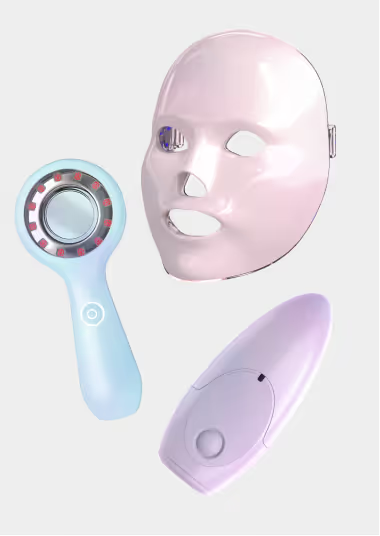
A mask, handheld device, panel, or targeted applicator can all be effective, but only when the engineering matches the intended use.
For anti-aging applications, usability is especially important. If a device is uncomfortable or inconvenient, users will not use it consistently. And without consistency, results are limited.
From skincare trend to technology-driven skin support
The anti-aging market is moving beyond traditional topical products. Consumers increasingly look for technologies that support visible results without invasive treatments or long recovery times.
PBM fits this shift naturally.
It is non-invasive, drug-free, and suitable for repeated use. It can also be combined with other technologies such as microcurrent, radiofrequency, vibration, heating and cooling, or skincare infusion systems.
For brands, this creates opportunities to develop multifunctional devices that combine visible results with strong user experience.
At Light Tree Ventures, we develop advanced photobiomodulation devices for beauty, wellness, medical, and recovery markets. From wavelength engineering and industrial design to certification and scalable manufacturing, we help brands create products that are safe, effective, and ready for global markets.
Looking to develop an anti-aging PBM device?
Let’s turn your concept into a market-ready product.
Start your project today.
Your next steps start here
Want to see how our expertise can support your business? Leave your details and our team will contact you shortly.